By the Medicine Desk of GlobalTimesAI
📅 July 2025 | GlobalTimesAI.com published this article.
Summary
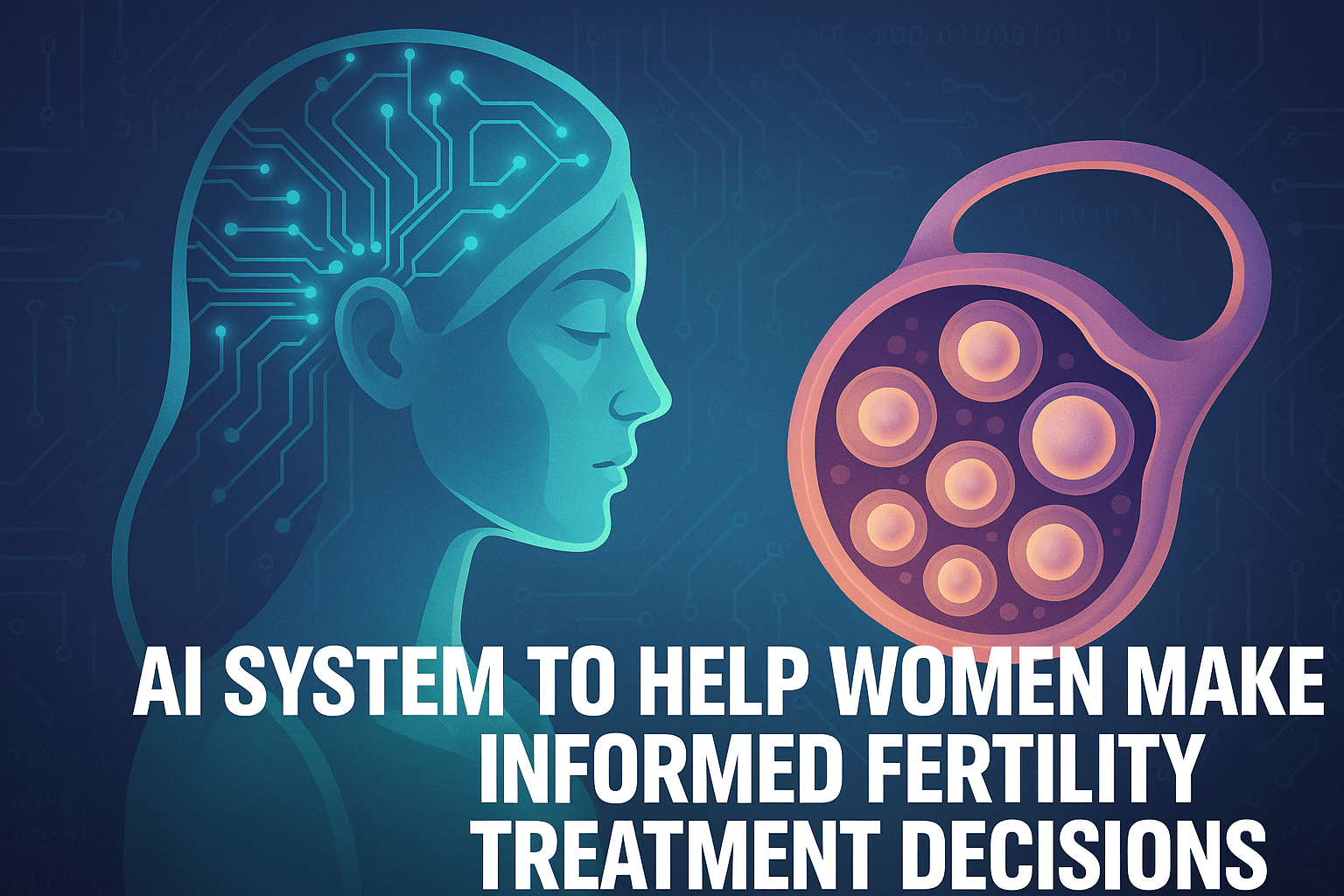
In a move away from conventional blood tests and toward data-driven fertility advice, a team at the University of Tokyo, led by Professor Harada Miyuki, has created a sophisticated AI model that forecasts a woman’s ovarian reserve and possible egg quality.
Background and Methods of the Research
- Retrospective data from 442 women who received assisted reproductive technology (ART) between June 2021 and January 2023 was used to train the model.
- Five clinical features are entered into a random forest classifier by researchers: age, parity/gravity, FSH levels, anti-Müllerian hormone (AMH), and menstrual history.
- AUC for the quantity model was 0.9101.
- AUC = 0.7983 was attained by the quality model using 14 variables, including residual serum markers.
- This surpassed conventional AMH-only methods and even invasive evaluations, resulting in prediction that is both precise and minimally invasive.
The Reasons It’s Superior to Common Exams
- Traditional indicators, such as age or AMH, are one-dimensional and frequently deceptive, particularly for women who have irregular periods or PCOS.
- The AI model captures the nuances of reproductive health by simultaneously incorporating multiple indicators.
- The increasing importance of machine learning in fertility is supported by additional AI tools, such as ILETIA for the best time to retrieve oocytes and AI for grading embryos.
More General Japanese Research & Trends
- Data from the Japan Oncofertility Registry (JOFR) shows over 11,500 patients consulted for fertility preservation until May 2024, with women forming the majority.
- Because ART procedures are now subsidized by national healthcare reforms, there is a greater need for reliable, easily accessible fertility tools.
- Prior to clinical roll-out, leading reviews stress the significance of multi-center collaboration, large-scale validation, and explainable AI.
Prospective Uses & Human Effects
1. Individualized Planning for Fertility
Before receiving emotional and monetary fertility treatment, women and couples could find out their actual ovarian status, including both count and quality.
2. Greater Access, Reduced Price
In rural or under-resourced areas, preconception care could be made available through a validated app that uses basic clinical or interview data.
3. Decision Assistance & Mental Health
Women may have more control over their reproductive choices and experience less anxiety about when to receive treatment if predictions are accurate.
4. Integration of Policy and Clinical
Guidelines for when to begin fertility treatment, when to freeze eggs, and how to provide advice in cases of early ovarian decline are just a few examples of how AI models may impact public health policy.
Recommended Internal Links for GlobalTimesAI.com
- “AI in Radiology and Beyond” explores how AI is changing diagnostics.
- View our article on “Emerging Casetool Apps,” which discusses tech startups utilizing medical AI.
- For more general health-related articles: “India’s Fertility Choices in 2025”
Prospects for the Future and Research Needs
- Multicenter validation: Putting the model to the test on larger samples outside of Tokyo and with a range of ethnic backgrounds.
- Explainable AI (XAI): The decision-making process of the model needs to be transparent and easy to understand in order to win over patients and clinicians.
- Longitudinal studies: Track patients over time to gauge how well the expected decline matches the actual results of fertility.
Table of Results
| Key Feature | Insight |
|---|---|
| Model Type | Random‑forest classifiers built on 442 patient records |
| Performance | Egg quantity AUC ~0.91; egg quality AUC ~0.80 |
| Improvement Over | AMH-only or age-based estimation |
| Impact | Personalized planning, lower cost, mental peace, rural reach |
| Research Needs | Larger data sets, cross-validation, XAI, clinical trials |
Final Word
Precision reproductive care is now a reality thanks to Japan’s AI innovation. Women may soon be able to make data-driven, guilt-free decisions regarding fertility by combining blood tests and medical interviews into a validated tool.
This is a story about empowering choice, de-stigmatizing fertility issues, and using technology for real social impact, and it is more than just science to readers of GlobalTimesAI.com.
Keep checking back as we follow this story, particularly as the proposed fertility app undergoes international testing and validation and may eventually be utilized in ART clinics around the world.
Disclaimer: This article discusses AI and reproductive health for informational and editorial purposes only. It is not medical advice. Always consult a licensed clinician for diagnosis or treatment. References reflect sources available at the time of writing and may change.