From Open to Guarded: Why Meta May Lock Down Its Strongest Models
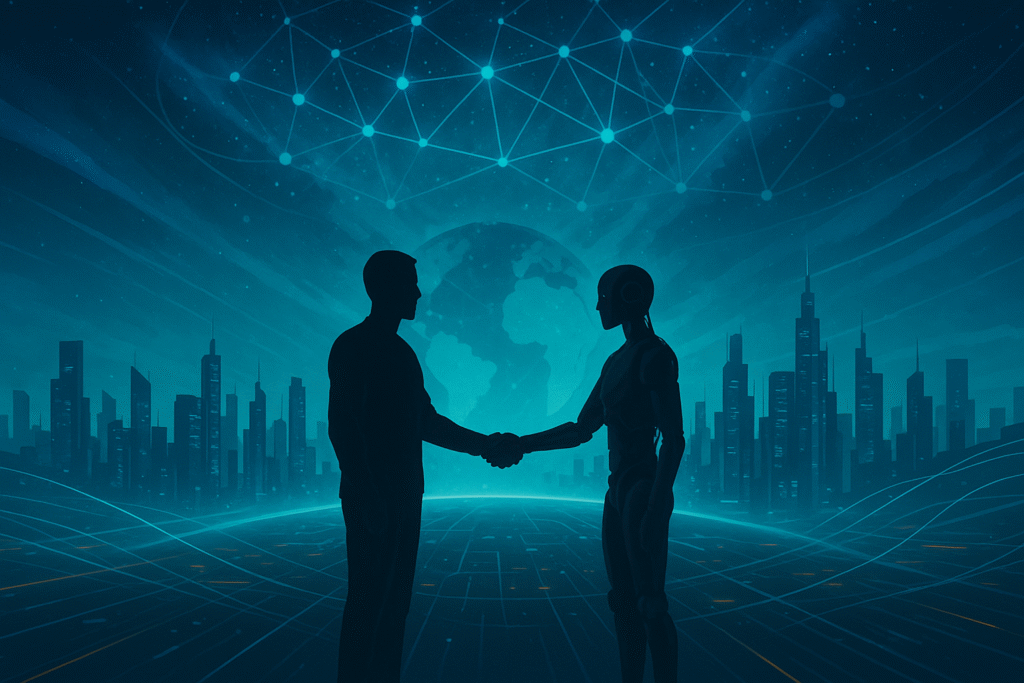
Good day, friends! After finding MSN’s summary of Zuckerberg’s claims, I spent a significant amount of time reading up on Meta’s most recent AI announcements. I wanted to share what I did learn, my thoughts, and what I believe it might mean for us humans.
The Advancement of Meta AI in the Direction of Self-Improvement (ASI)
Here’s the scoop:Mark Zuckerberg disclosed in a July 30, 2025, policy paper that Meta’s AI systems are already exhibiting early indications of self-improvement, which means they’re improving their own performance without direct human guidance. This is widely recognized as a first step toward artificial superintelligence (ASI)—AI that could outthink us in ways we can barely fathom.
The Big Concept: ASI’s Promise and Superintelligence
Zuckerberg is presenting ASI as a transformative force rather than just a grand tech ambition. Think about accelerating scientific breakthroughs or creating tools that help you write, create, connect—or even learn who you want to become in life. That’s his “personal superintelligence” pitch: highly capable AI that assists you throughout your day—like ultra-smart wearable glasses.
Integrating AI into your everyday life in highly customized ways is so meta.
Prioritizing Safety: Stricter Releases to Prevent Abuse
The responsible part, however, is that Zuckerberg says these potent AI systems will no longer be open-source. In fact, Meta will no longer publicly release its most advanced models, citing safety concerns. This marks a major shift away from their previous more open approach, especially around models like LLaMA.
Put another way, less public access equals more power.
Superintelligence Labs and TBD Lab are Meta’s new elite.
The organizational aspect is equally striking. Meta has launched Meta Superintelligence Labs (MSL) in mid-2025, headquartered in Menlo Park. Within that, an ultra-secret “TBD Lab” is spearheading efforts on their most ambitious projects like LLaMA 4.X and “Behemoth.”
Meta’s substantial financial and human resource investments include building specialized infrastructure, luring executives away from rivals, and providing compensation packages worth billions of dollars. In addition, there is internal conflict; members of current AI teams feel underappreciated or marginalized, and some are even thinking about leaving.
My Opinion on Everything
To be honest, I’m conflicted. Meta’s vision of personal superintelligence sounds beautifully empowering at first glance. A friendly AI companion that helps me create, learn, connect, and maybe even remember my mom’s birthday—that’s appealing.
However, the more I look, the more warning signs I see flashing. Locked-down release strategies and secretive labs fuel concerns about who actually gets to benefit from this tech—and under what terms. I find Meta’s business goals, which are primarily ad and engagement driven, concerning. According to some critics (such as Vox), Zuckerberg’s story is largely buzzword-heavy and lacking in substance, suggesting that he is providing “sugar water” rather than significant innovations.
Potential Consequences for Society and Human Life
Let me now dissect the probable knock-on effects:
Individual Self-determination … or Monitoring?
On the one hand, AI that supports memory, artistic endeavors, or personal objectives may improve people’s quality of life. But it also raises privacy alarms—especially when it’s centered around smart glasses that constantly see, process, and learn from your life.
Unemployment and Inequality in the Economy
Many jobs may become obsolete if ASI speeds up automation, which would cause economic instability in society. And if only wealthy companies or privileged individuals access such tech (via expensive devices or subscriptions), inequality could widen.
Concentration of Power and Ethical Supervision
Meta has enormous control over how AI affects our world thanks to their increasingly covert strategy, but they are also less accountable to the public. That’s a red flag in my book, especially when we’re talking about technology with potential for near-godlike capabilities.
Existential Danger
An existential worry that is more widespread is that ASI may become too powerful for us to control if it can rapidly evolve and result in a singularity or intelligence explosion. Nick Bostrom and other researchers contend that this might be harmful. Additionally, surveys reveal that many AI experts believe there is a slight chance of disastrous consequences if advancements are made too quickly or value alignment is not achieved.
Concluding remarks
- Superintelligence is undoubtedly being pushed hard by Meta AI, and self-improving systems are showing early indications. That’s exciting—but also unprecedented.
- Meta is moving in the direction of closed-door development, which could either safeguard society or simply consolidate power.
- Although the promise of “personal superintelligence” is alluring, it also brings up difficult issues with autonomy, equity, and surveillance.
- We are at a turning point in history, and this decade could determine whether artificial intelligence leads to emancipation or something much more sinister.
I’m there for the time being, hopeful about AI’s potential but extremely worried about how we handle its enormous power.
Disclaimer
All facts are verified from reliable sources; images are AI-generated for illustration only—no real-event photos are used.