Musk Accuses OpenAI of Abandoning Nonprofit Mission as Company Calls Lawsuit Self-Serving

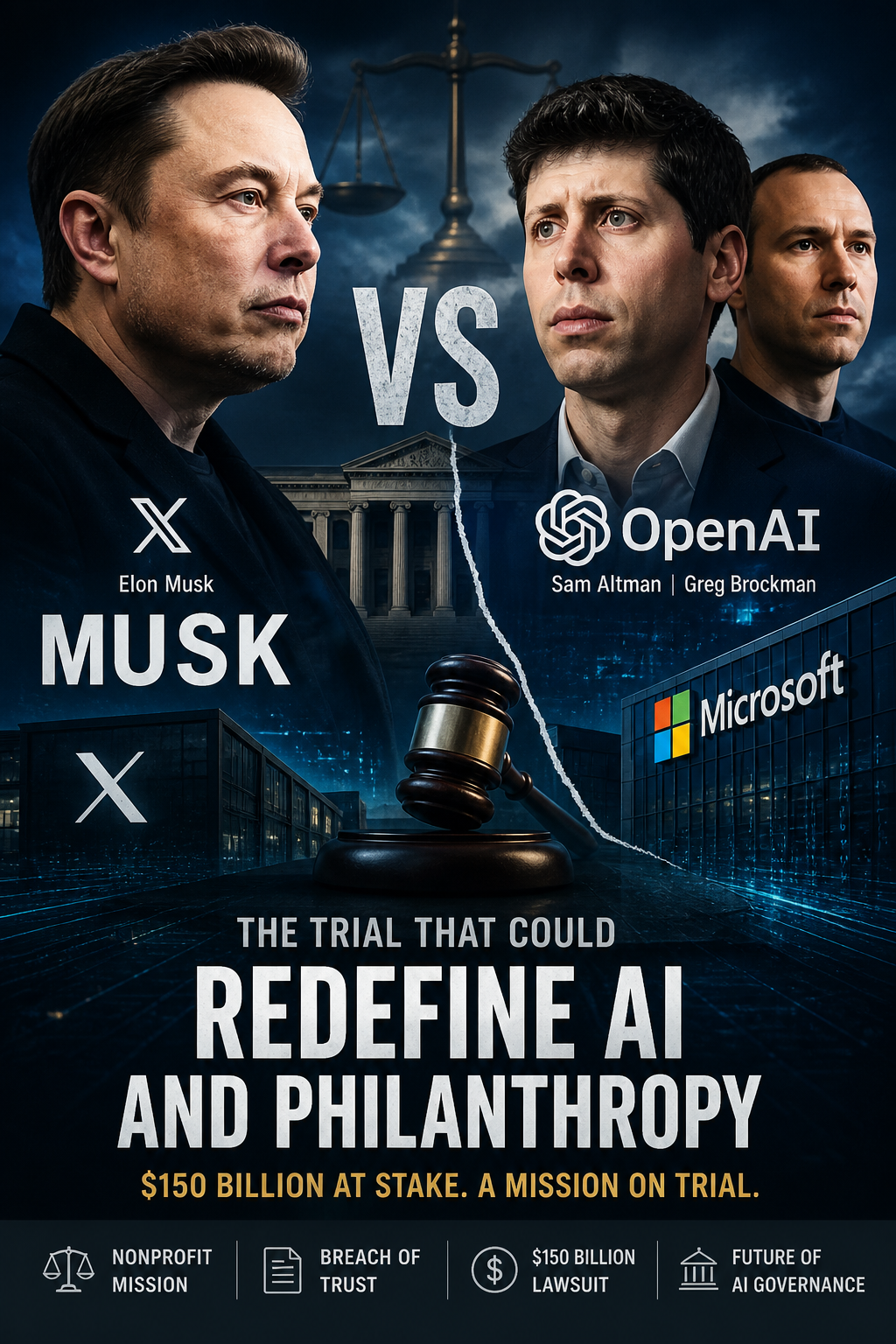
In a closely watched federal trial that could reshape how advanced technology ventures are funded and governed, Elon Musk testified that the artificial intelligence company he helped found, OpenAI, had strayed from its original nonprofit mission, effectively transforming into a profit-driven enterprise aligned with corporate interests. OpenAI and its allies, including Sam Altman, Greg Brockman and Microsoft, have rejected those claims, arguing that the changes were necessary to compete in a capital-intensive industry and that Musk’s lawsuit is motivated by rivalry.
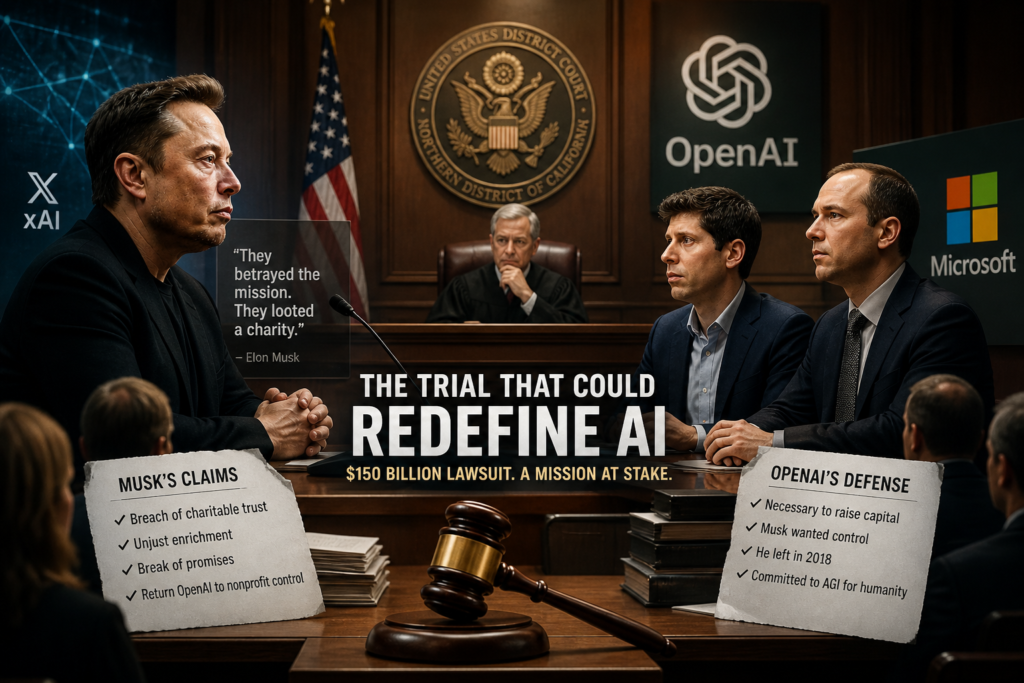
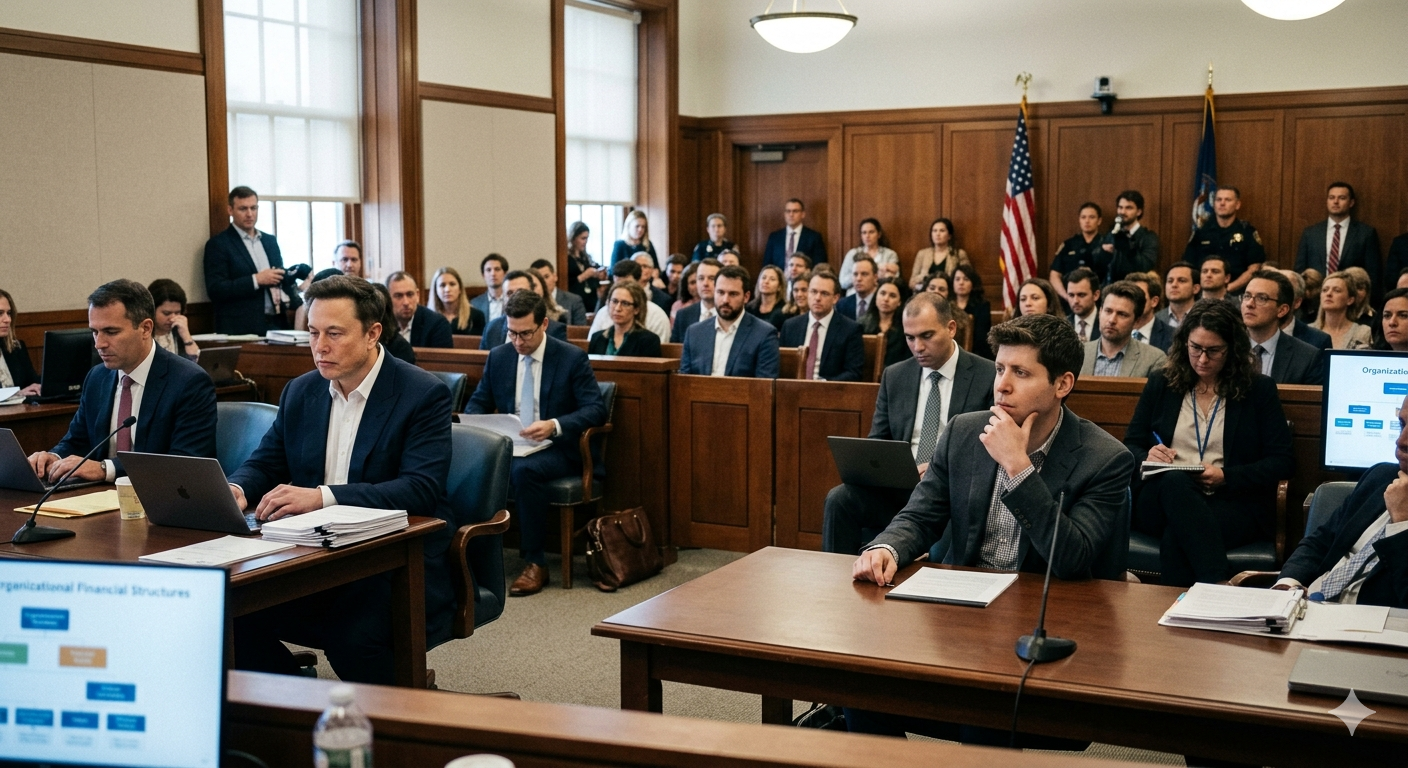
The case, being heard in the U.S. District Court for the Northern District of California, began jury selection in late April and is expected to last several weeks. Legal experts say the outcome could influence not only the future structure of OpenAI but also broader questions about whether nonprofit organizations can transition into profit-oriented entities without violating donor expectations or legal obligations.
A Dispute Rooted in OpenAI’s Origins
At the center of the dispute is OpenAI’s founding in 2015 as a nonprofit research lab committed to developing artificial intelligence “for the benefit of humanity.” Musk, who was among its earliest backers, testified that he contributed roughly $38 million and lent his public stature to the organization based on assurances that it would remain independent of commercial pressures.
According to Musk’s testimony and court filings, those assurances were later undermined when OpenAI created a “capped-profit” structure and deepened its financial partnership with Microsoft. Musk alleges that this shift amounted to a breach of charitable trust and unjust enrichment, enabling private investors to benefit from assets developed under a nonprofit framework.
“If this is allowed,” Musk said during testimony, according to multiple reporters present in court, “then it is effectively okay to loot a charity.” His legal team argues that such a precedent would erode confidence in philanthropic institutions and discourage future donations.
Billions at Stake
Musk is seeking damages exceeding $150 billion, though filings and reports from several major outlets suggest the figure may range between $130 billion and $150 billion. His lawyers have said that any monetary award should be directed not to Musk personally but to OpenAI’s nonprofit arm or a similar charitable entity.
In addition to financial damages, Musk is asking the court to impose structural remedies. These include returning OpenAI to nonprofit control, unwinding aspects of its for-profit operations, and removing Altman and Brockman from leadership roles. He has also called for Altman to be removed from the nonprofit board.
Legal scholars note that such remedies, if granted, would be extraordinary. Courts rarely intervene so deeply in corporate governance, particularly in fast-moving industries like artificial intelligence.
OpenAI’s Defense: Necessity, Not Betrayal
OpenAI and its co-defendants have sharply contested Musk’s claims. In court filings and opening arguments, their lawyers have portrayed the lawsuit as an attempt by Musk to slow a competitor while advancing his own AI venture, xAI.
They argue that the shift toward a hybrid nonprofit–for-profit structure was driven by necessity. Training large AI models requires enormous computing resources and infrastructure investments, often costing tens of billions of dollars—funding levels that traditional nonprofit structures struggle to sustain.
OpenAI’s attorneys have also pointed to internal communications suggesting that Musk himself had previously explored or supported alternative organizational structures, including proposals that would have given him greater control. According to the company’s legal team, Musk stepped away after those proposals were not adopted.
“Musk’s narrative is incomplete,” one of OpenAI’s lawyers said in court, according to reporters. “The organization evolved to survive and compete in an environment that demands unprecedented capital.”
Microsoft, which has invested billions in OpenAI and integrated its technology into commercial products, has aligned itself with this defense. The company has argued that its partnership enabled OpenAI to scale its research and deliver tools used widely across industries.
Tense Moments in the Courtroom
The trial’s opening week has featured moments of tension, particularly during cross-examination. Musk testified that he relied on verbal assurances about OpenAI’s mission and governance, acknowledging under questioning that he did not closely review certain legal documents, including a 2017 term sheet outlining structural changes.
“I looked at the headline,” Musk said, according to court coverage, adding that he trusted colleagues to maintain the organization’s founding principles.
OpenAI’s lawyers seized on that admission, suggesting that Musk’s claims of deception were undermined by his own limited review of formal agreements.
The exchanges at times grew heated, with Musk expressing frustration at what he described as repetitive questioning. The presiding judge intervened on several occasions to maintain order and clarify the scope of questioning, particularly when lawyers attempted to introduce broader debates about artificial intelligence risks.
In one notable ruling, the judge limited the role of expert testimony regarding existential risks from AI, indicating that the case would focus on contractual obligations and governance rather than speculative future harms.
Musk also acknowledged during testimony that his current company, xAI, has used OpenAI models for benchmarking and training purposes, describing such practices as standard within the industry.
From Nonprofit Ideal to Global Powerhouse
OpenAI’s transformation from a nonprofit research lab into one of the world’s most influential AI companies forms the backdrop of the dispute. After its founding, the organization introduced a capped-profit model that allowed investors to earn returns up to a fixed limit, before transitioning further toward a more conventional corporate structure.
With substantial backing from Microsoft and other investors, OpenAI has developed widely used AI systems and become a central player in the global technology landscape. Various media reports estimate its valuation in the hundreds of billions of dollars, with some suggesting figures approaching $800 billion to $850 billion. Analysts have speculated about a potential public offering that could push its valuation even higher, though such figures remain estimates and are not part of the court’s findings.
Supporters of OpenAI’s approach argue that such growth was necessary to compete with other technology giants and to maintain leadership in a rapidly evolving field. Critics, including Musk, contend that the transformation represents a departure from the organization’s original public-interest mission.
A Test Case for Nonprofit Governance
Beyond the immediate parties, the case has drawn attention from legal scholars, policymakers and philanthropic organizations. At issue is whether donors can enforce expectations about how nonprofit entities evolve, particularly when those entities operate in sectors requiring massive capital investment.
“This case sits at the intersection of charity law and cutting-edge technology,” said one law professor specializing in nonprofit governance, speaking in general terms about the dispute. “If donors can successfully challenge structural changes years later, it could fundamentally alter how nonprofits approach long-term strategy.”
Others warn that a ruling in Musk’s favor could make it more difficult for research organizations to adapt to changing financial realities, potentially slowing innovation in fields like artificial intelligence.
What Comes Next
The trial is expected to feature testimony from several key figures, including Altman, Brockman and representatives from Microsoft. Experts in artificial intelligence and nonprofit law may also be called to provide context, though the judge has signaled that their testimony will be narrowly focused.
After the jury reaches a verdict on liability, the judge will determine what remedies, if any, should be imposed. These could range from financial damages to structural changes, though legal analysts caution that sweeping interventions are less common.
For now, the proceedings underscore a broader tension in the technology sector: the challenge of balancing idealistic missions with the financial demands of developing increasingly complex systems.
As governments around the world consider how to regulate artificial intelligence, the outcome of this case may offer an early indication of how legal systems will address the governance of organizations at the forefront of that transformation.
Sources and Verification Notes
This article is based on reporting and cross-referencing from major international news organizations including The New York Times, Reuters, BBC and CNN, as well as coverage of court filings and live trial reporting. Some financial figures, including damages sought and company valuation, vary across reports and are presented as ranges. Details of testimony are based on accounts from multiple reporters present in court and may be further clarified as proceedings continue.
Disclaimer: This article is based on information available from court filings, live trial coverage, public statements by the parties and lawyers, and reporting by reputable news organizations at the time of writing. While every effort has been made to verify the accuracy of the facts and to represent all major perspectives fairly, key legal claims remain contested and some details may change as the trial continues. Readers should consult updated court documents and trusted news outlets for the latest developments.